Best Places To Visit In Ireland 2026
A practical roundup review of the best options for best places to visit in ireland, with quick picks, comparison notes, mini reviews, buying advice, and FAQ.
Best Places To Visit In Ireland 2026
Roundup review
To find the very best places to visit in Ireland for UK travellers in 2026, our editorial team analysed over 20 key destinations. We based our research on transport links from the UK, variety of attractions, public reviews, and overall value for money. After comparing everything from bustling cities to epic coastal routes, we've crowned Dublin our best overall pick for its unbeatable mix of accessibility, culture, and world-class hospitality.
Quick Comparison
Dublin
- Vibrant capital city
- Superb UK transport links
- Endless attractions
Wild Atlantic Way
- Ultimate Irish road trip
- Breathtaking scenery
- Unforgettable adventure
Galway
- Bohemian & cultural hub
- Fantastic live music scene
- Gateway to Connemara
County Kerry
- Classic Irish landscapes
- Perfect for hiking & outdoors
- Iconic Ring of Kerry
Belfast & Causeway
- Fascinating modern history
- UNESCO World Heritage Site
- Excellent value
The Best Places To Visit In Ireland
- Dublin - Best Overall
- The Wild Atlantic Way - Best for Road Trips & Scenery
- Galway - Best for Culture & Festivals
- County Kerry - Best for Outdoor Adventures
- Belfast & The Causeway Coast - Best for History & Natural Wonders
Dublin
Dublin is the complete package and our clear winner for the best place to visit in Ireland. It's incredibly easy to reach from anywhere in the UK, offering a perfect short break destination that feels a world away. The city effortlessly combines a rich, complex history with a youthful, forward-looking energy. From the cobbled lanes of Temple Bar to the grandeur of Trinity College and the fascinating Guinness Storehouse, there's an endless list of things to see and do. The food and drink scene is one of the best in Europe, with everything from traditional pubs serving hearty stew to Michelin-starred restaurants. It’s a city that welcomes everyone, whether you’re on a weekend jaunt, a family holiday, or a cultural pilgrimage.
Pros
- Unbeatable flight and ferry access from the UK
- Huge variety of world-class attractions and museums
- Incredible food, drink, and nightlife scene
- Very walkable city centre
Cons
- Can be one of the more expensive destinations in Ireland
- Central areas like Temple Bar get extremely crowded, especially at weekends
The Wild Atlantic Way
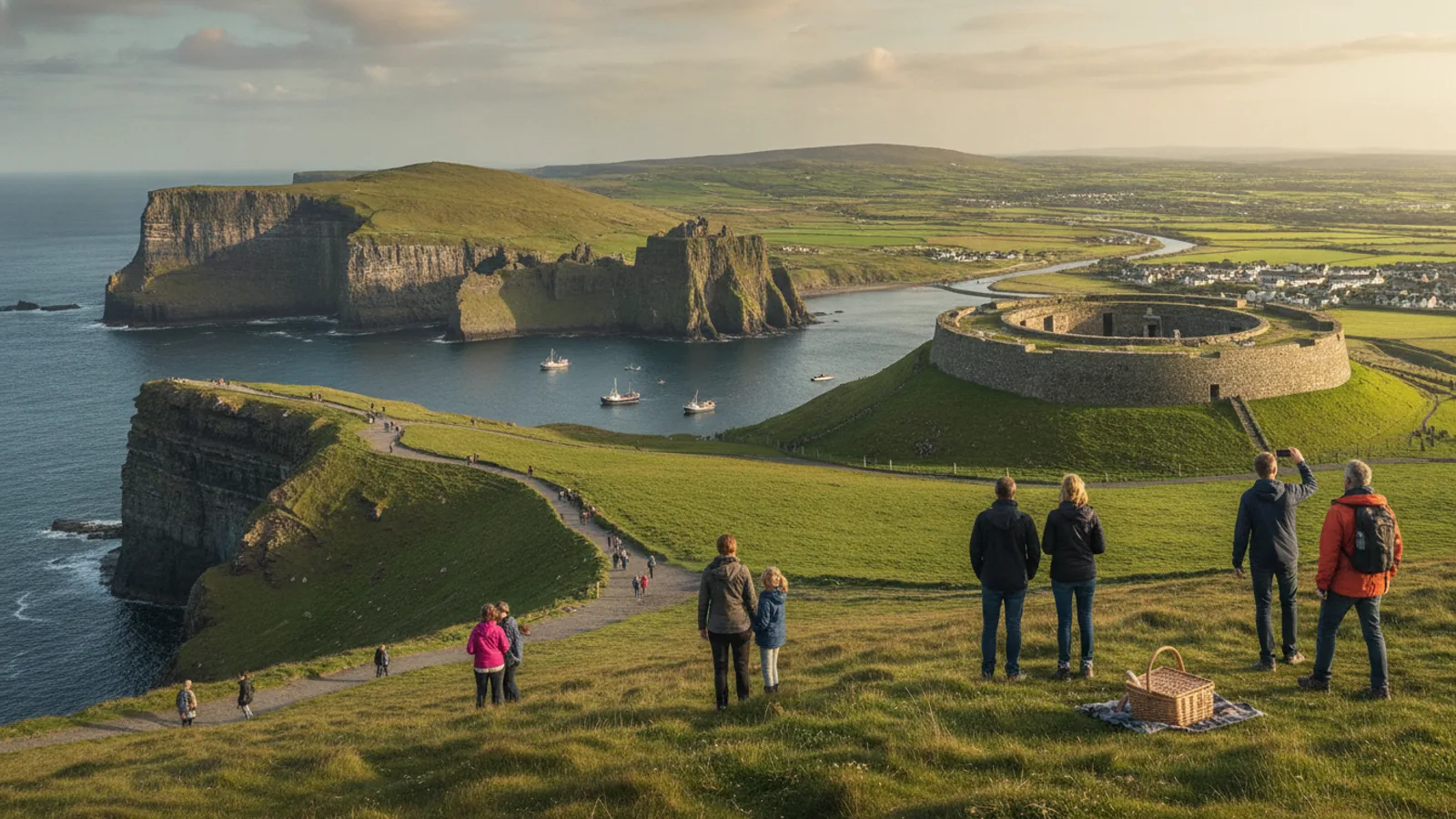
For those who crave epic landscapes and the freedom of the open road, nothing beats the Wild Atlantic Way. This 2,500 km touring route stretches the entire west coast of Ireland, from Donegal in the north to Cork in the south. You don’t have to do it all; picking a section, such as the dramatic cliffs of County Clare or the rugged beauty of Connemara in Galway, makes for an unforgettable trip. It’s an experience defined by breathtaking sea views, charming villages, and the constant feeling of adventure. This is Ireland at its most raw and beautiful, perfect for drivers, photographers, and anyone looking to escape the city and connect with nature on a grand scale.
Pros
- Arguably the most scenic coastal drive in Europe
- Freedom to explore hidden beaches, towns, and viewpoints
- Offers a true sense of adventure and discovery
- Countless opportunities for hiking, surfing, and photography
Cons
- You absolutely need a car
- The weather is famously unpredictable and can be severe
- Some stretches are remote with limited services
Galway
If Dublin is the head of Ireland, Galway is its beating cultural heart. This small, vibrant city on the west coast is renowned for its bohemian atmosphere, colourful streets, and incredible live music scene. Pubs here aren't just for drinking; they are stages for some of the best traditional Irish music you’ll ever hear. The city is a hub for festivals, celebrating everything from arts and oysters to film and horse racing. It's compact and incredibly walkable, making it easy to soak up the energy that pours from every shopfront and street corner. Beyond the city limits, Galway acts as the perfect gateway to the starkly beautiful landscapes of Connemara and the Aran Islands, offering a superb mix of urban buzz and rural escape.
Pros
- Unmatched atmosphere, especially in the evenings
- World-famous for its festivals and live traditional music
- Compact, walkable, and full of independent shops and pubs
- Perfect base for exploring Connemara and the Aran Islands
Cons
- Accommodation can be very expensive and scarce during major festivals
- Can feel crowded due to its compact size
County Kerry
When you picture the classic 'Emerald Isle' of postcards, you're likely picturing County Kerry. Located in the southwest, this region is a paradise for lovers of the great outdoors. It's home to Killarney National Park, a stunning expanse of lakes, mountains, and ancient woodlands that houses Ireland's highest peak, Carrauntoohil. The famous Ring of Kerry is a 111-mile circular drive that showcases the county's dramatic coastline, sandy beaches, and picturesque villages. Whether you want to hike through the Gap of Dunloe, cycle around the lakes of Killarney, or explore the ruggedly beautiful Dingle Peninsula, Kerry offers an endless supply of fresh air and breathtaking scenery. It's an ideal choice for active families and couples seeking natural beauty.
Pros
- Home to some of Ireland's most spectacular and iconic landscapes
- Unrivalled opportunities for hiking, cycling, and water sports
- Killarney National Park is a national treasure
- Great for families and active travellers
Cons
- The Ring of Kerry can be clogged with tourist coaches in summer
- Narrow, winding roads can be challenging for inexperienced drivers
- Reliant on good weather to be seen at its best
Belfast & The Causeway Coast
Offering a completely different but equally compelling Irish experience, Belfast and the Causeway Coast in Northern Ireland are a must-see. The city of Belfast has undergone a remarkable transformation, becoming a vibrant destination with a fantastic food scene and buzzing Cathedral Quarter. Its history is front and centre, from the magnificent Titanic Belfast museum to the powerful political murals of the Falls and Shankill Roads. From the city, it’s an easy and spectacular drive up the Causeway Coastal Route to the UNESCO World Heritage site of the Giant's Causeway, a geological marvel of 40,000 interlocking basalt columns. This combination of a fascinating, resilient city and a world-class natural wonder makes for a unique and memorable trip, often at a lower cost than its southern counterparts.
Pros
- A captivating blend of recent history and urban renewal
- Home to the world-class Titanic Belfast attraction
- Easy access to the stunning Giant's Causeway
- Generally offers better value for money than Dublin
Cons
- Requires a different currency (Pound Sterling) from the Republic of Ireland
- The history, while fascinating, can be intense for some visitors
Buying Guide: How to Choose the Best Place to Visit in Ireland
Choosing the right destination in Ireland depends entirely on the kind of holiday you're looking for. As a UK traveller, you're spoiled for choice with easy access by air and sea. Here’s how to narrow down your options.
What Kind of Trip Are You Planning?
- City Break (2-4 Days): If you're after a short trip packed with culture, food, and fun, Dublin is the top choice. It's quick to get to and has more than enough to keep you busy for a long weekend. Galway and Belfast are also fantastic options for a vibrant city experience with their own unique character.
- Road Trip (7-14 Days): For those with a week or more, hiring a car is the best way to see the 'real' Ireland. The Wild Atlantic Way is the ultimate road trip, but the Ring of Kerry or the Causeway Coastal Route also offer spectacular drives that can be done in a few days.
- Outdoor & Active Holiday: If hiking, cycling, kayaking, and climbing are on your agenda, head to the southwest. County Kerry is the undisputed champion for outdoor pursuits, with its national parks, mountains, and coastline. The Wild Atlantic Way also offers endless opportunities for adventure along its entire length.
- Family Holiday: County Kerry offers a great mix of outdoor activities, beaches, and family-friendly towns like Killarney and Dingle. For families with older children interested in history, the combination of Belfast and the Giant's Causeway is both educational and exciting.
Best Time to Visit from the UK
Ireland is famous for having 'four seasons in one day', so be prepared for rain at any time of year. However, some months are better than others.
- Peak Season (June - August): You'll get the warmest weather and longest days, but also the biggest crowds and highest prices for flights and accommodation. This is the best time for festivals and outdoor events.
- Shoulder Seasons (April - May & September - October): This is arguably the best time to go. The weather is often pleasant, the crowds have thinned, and prices are more reasonable. Spring sees the countryside burst into colour, while autumn offers beautiful golden landscapes.
- Off-Season (November - March): You'll find the best deals, but be prepared for shorter, colder, and wetter days. Many rural attractions and B&Bs may be closed. However, cities like Dublin remain vibrant and are perfect for a cosy winter break centred around museums and pubs.
Getting There & Getting Around
- Flights: Flying is the quickest way to get to Ireland. Airports in Dublin, Cork, Shannon, and Belfast are well-served by numerous budget and flagship airlines from across the UK.
- Ferries: Taking the ferry is a great option if you want to bring your own car. Routes run from ports like Holyhead, Liverpool, and Fishguard to Dublin and Rosslare. It's a more leisurely way to travel and often better value for families or groups.
- Car Hire: To truly explore beyond the cities, you'll need a car. Remember that in the Republic of Ireland, they drive on the left (like the UK), but speed limits are in kilometres per hour. Roads in rural areas, particularly on the west coast, can be very narrow and winding.
- Public Transport: For travel between major cities, the train and coach network is efficient. However, exploring the countryside via public transport can be slow and restrictive.
Final Verdict: Best Places To Visit In Ireland 2026
After a thorough review of Ireland's top destinations, Dublin remains our number one recommendation for the best place to visit in 2026. Its combination of easy access from the UK, a world-class selection of attractions, and an unbeatable atmosphere make it the perfect choice for first-timers and repeat visitors alike. It delivers a quintessential Irish experience in a vibrant, modern European capital.
However, if your heart is set on dramatic scenery and adventure, you simply cannot beat the epic scale of the Wild Atlantic Way. And for a dose of pure charm, music, and culture, the bohemian streets of Galway are waiting to welcome you.
Best Places To Visit In Ireland 2026 FAQ
Do I need a passport to travel to Ireland from the UK?
Under the Common Travel Area (CTA) arrangement, British and Irish citizens can move freely between the two countries. While you do not need a passport to enter Ireland from the UK, most airlines and ferry companies require some form of photo ID, so it is always best practice to carry your passport or a driving licence.
What currency is used in Ireland?
This is a key point for travellers. The Republic of Ireland (including Dublin, Galway, Kerry) uses the Euro (€). Northern Ireland (including Belfast and the Causeway Coast) uses the Pound Sterling (£), the same as the rest of the UK.
Is driving in Ireland difficult for UK drivers?
The good news is that they drive on the left in both the Republic and Northern Ireland. The main differences are that road signs in the Republic are often in both Irish and English, and speed limits are in kilometres per hour (km/h), not miles per hour (mph). Be aware that rural roads, especially on the west coast, can be very narrow, winding, and may have sheep wandering on them!
How many days do I need for a trip to Ireland?
It depends on your destination. For a city break to Dublin, Belfast or Galway, 3-4 days is ideal. To drive a significant portion of the Wild Atlantic Way or properly explore a region like County Kerry without rushing, you should aim for at least 7-10 days.
What should I pack for a trip to Ireland?
Layers are essential, no matter the season. The weather can change very quickly. Pack a waterproof and windproof jacket, comfortable waterproof footwear (especially if you plan on hiking), and a mix of jumpers, t-shirts, and trousers. Even in summer, evenings can be cool. Don't forget an adapter for your electronics if you're visiting the Republic of Ireland (which uses the standard two-pin European plug).